Can You Paint Oak Cabinets Without the Wood Grain Showing?
Last Updated: September 22, 2026
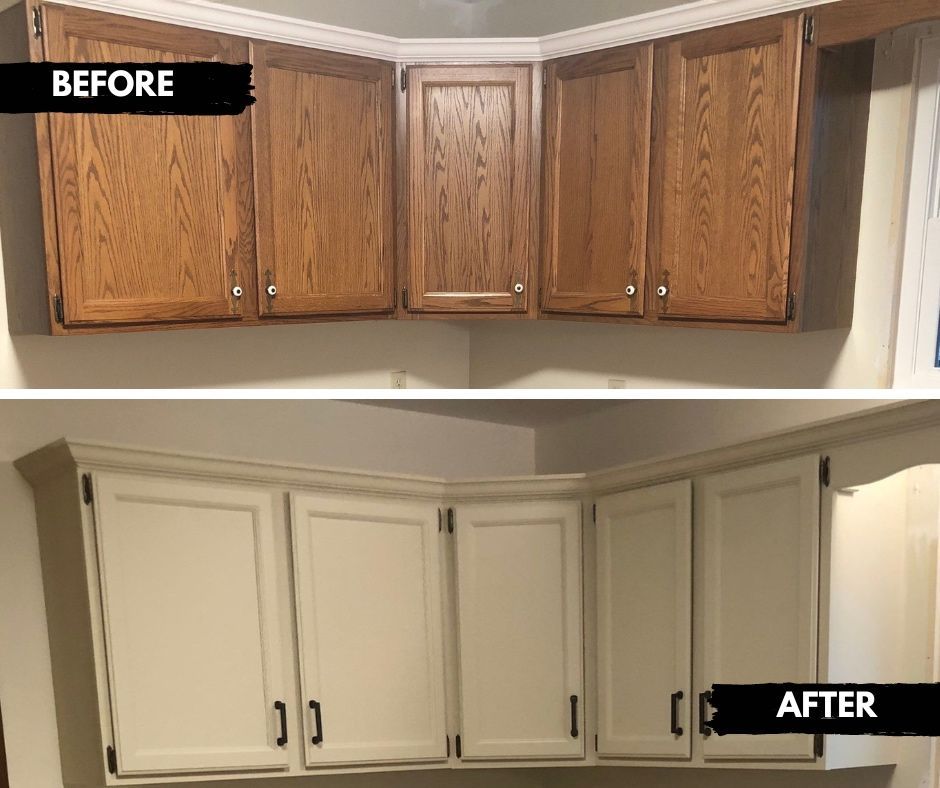
Yes, you can paint oak cabinets without the wood grain showing, or at least without it being nearly as noticeable. But there’s a catch: oak naturally has deep, open grain, so getting a smooth finish takes more preparation than a simple sanding. If you like a little texture showing through, that’s easy enough. If you’re hoping for that smooth, almost factory-finished look, the grain needs to be filled and properly prepared before the finish coats go on.
Before you assume your oak cabinets are destined to look like painted oak forever, here’s what you should know.
Why Oak Grain Shows Through Paint
Oak is a popular cabinet material for a reason. It’s strong, durable, and can hold up for decades. The downside (for painting) is that oak has a very pronounced grain pattern. Those tiny grooves and pores don’t disappear when you add paint. In fact, a fresh coat of paint can sometimes make them a lot more noticeable because you now have a smooth, uniform color highlighting the texture underneath. That doesn’t mean oak cabinets can’t be painted beautifully. But it does mean the desired finish needs to be considered before the painting starts. There’s a big difference between changing the color of oak cabinets and trying to make painted oak look completely smooth.
Hiding Wood Grain Takes More Than Paint
If the goal is a smoother finish, preparation does most of the heavy lifting. Simply applying thicker coats of paint isn't the answer. That can create its own problems without actually eliminating the grain. A professional cabinet painting process may include:
- Cleaning and degreasing to remove cooking oils, dirt, and other contaminants.
- Sanding the existing finish to prepare the surface for primers and coatings.
- Applying a grain filler to fill the deeper pores and texture that naturally occur in oak.
- Sanding again to smooth the filled surface and remove imperfections.
- Priming with a product appropriate for the existing wood and finish.
- Applying finish coats designed specifically for cabinets and other high-use surfaces.
The grain-filling step is what really makes the difference when you're trying to achieve a smoother appearance.
It adds time and labor (and cost) to the project, but skipping it while expecting perfectly smooth cabinets is a little like skipping drywall mud and wondering why you can still see the seams.
How Smooth Can Painted Oak Cabinets Get?
This is where expectations matter. There are different levels of “smooth,” and deciding what you want before the project begins can save some disappointment later.
Leaving Some Natural Grain
Not everyone wants or needs the grain completely hidden. Painting oak without extensive grain filling can create a clean, updated appearance while retaining some of the wood's natural character. You may still see and feel the grain when looking closely, but the overall transformation is there.
Minimizing the Grain
With additional filling, sanding, and preparation, much of the grain can be minimized. This can give the cabinets a significantly smoother, more contemporary appearance without necessarily chasing absolute perfection in every pore.
Going for a Nearly Factory-Smooth Finish
If you want your oak doors to resemble smooth maple or MDF cabinets, considerably more preparation may be required. Multiple rounds of filling and sanding may be necessary, particularly on oak with very deep grain. Even then, it’s worth remembering that you’re still working with natural wood. The goal is usually to dramatically reduce the appearance of the grain rather than pretend the oak underneath never existed.
Important: Grain Isn’t the Only Thing That Can Show Through
Unfortunately, oak has another trick up its sleeve. Even if the grain isn’t an issue, the wood itself can still cause trouble if it isn't properly primed. Oak contains natural compounds called tannins, and those tannins can bleed through paint and leave behind yellowish or brown stains. Not exactly the crisp white kitchen you had in mind. And piling on another coat of paint usually isn't going to save the day (look up “tannin bleed through” to see what we mean). The tannins need to be properly sealed with the right primer before the finish coats go on. Usually with a specialized stain-blocking primer. Basically, when it comes to painting oak, it pays to know what you are doing.
The Takeaway: Decide How Much Grain You’re Comfortable With
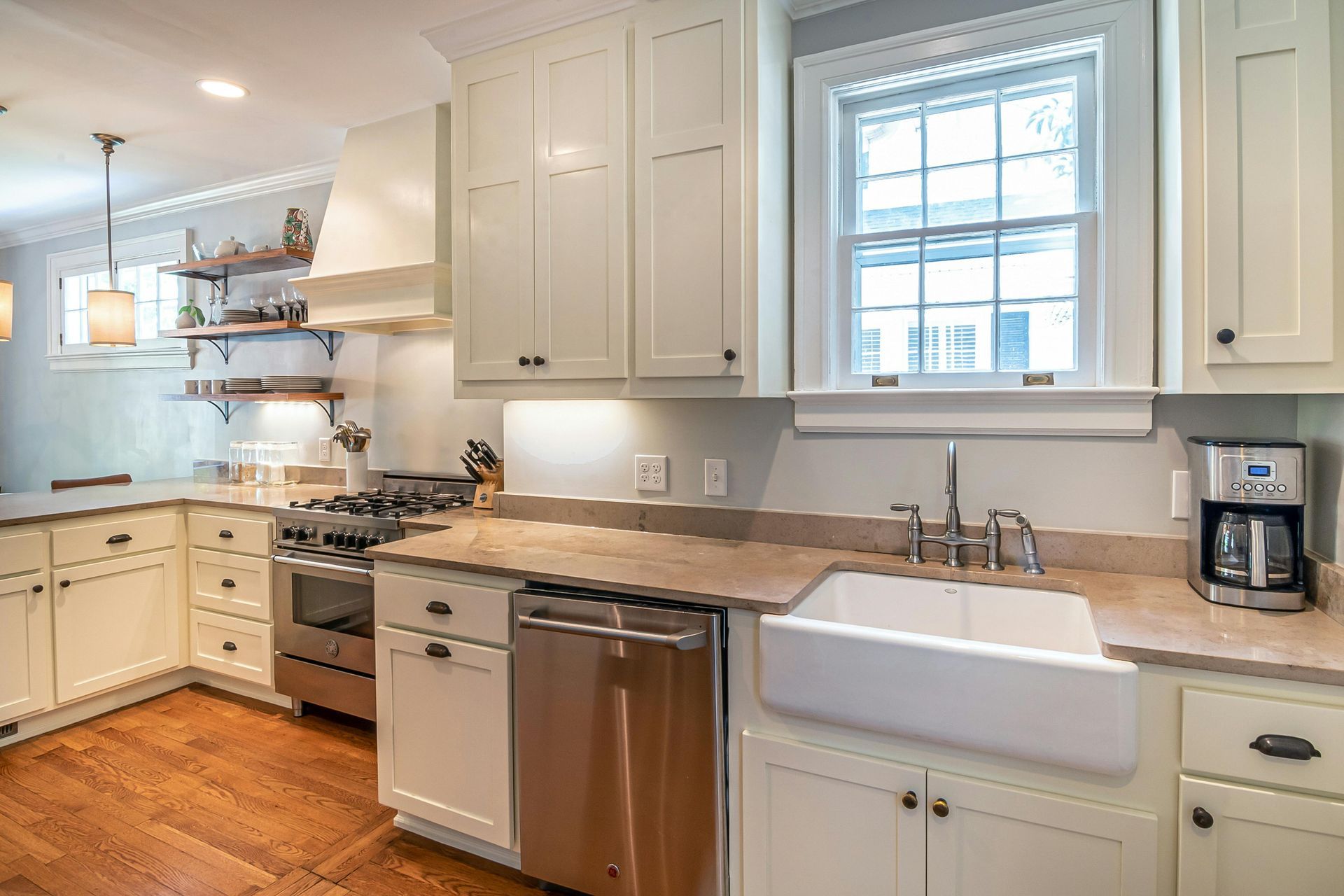
Oak cabinets can be excellent candidates for painting, especially when the cabinets themselves are still in good condition. The bigger question is what you want them to look like when the project is finished. If you don’t mind some subtle wood texture, the preparation process can be relatively straightforward. If you want an extremely smooth finish, expect additional filling, sanding, and labor. And honestly, if you are looking for perfection-smoothness, we recommend considering switching materials altogether.
The bottom line? Before your project starts, make sure you and your painter are on the same page about how much visible grain is acceptable. “Paint my oak cabinets white” and “make my oak cabinets look completely smooth” can be two very different projects.
McLain’s Painting
Need a first stop? At McLain’s, we can look at your existing cabinets, talk through the finish you have in mind, and explain what level of preparation it will take to get there. Because with oak cabinets, getting the color right is only half the job. And we’re in the business of doing the whole job right. Contact us for any other questions!
Frequently Asked Questions
Does primer hide oak wood grain?
Primer can help create a more uniform surface, but primer alone generally won't completely hide oak's deeper grain. If a very smooth finish is the goal, grain filling and additional preparation may be needed.
Do you have to fill oak grain before painting cabinets?
Not necessarily. If you don't mind seeing some of the natural grain through the finish, you can paint oak cabinets without completely filling it. Grain filler becomes more important when you want a much smoother appearance.
Will multiple coats of paint eventually hide the grain?
Not reliably. Adding extra paint isn't a substitute for properly filling and sanding the grain. Too much paint can also create other finish problems.
Are oak cabinets worth painting instead of replacing?
They certainly can be. If your cabinets are sturdy, functional, and you like the existing layout, professional painting can give them a dramatically different appearance without replacing the entire cabinet system.